

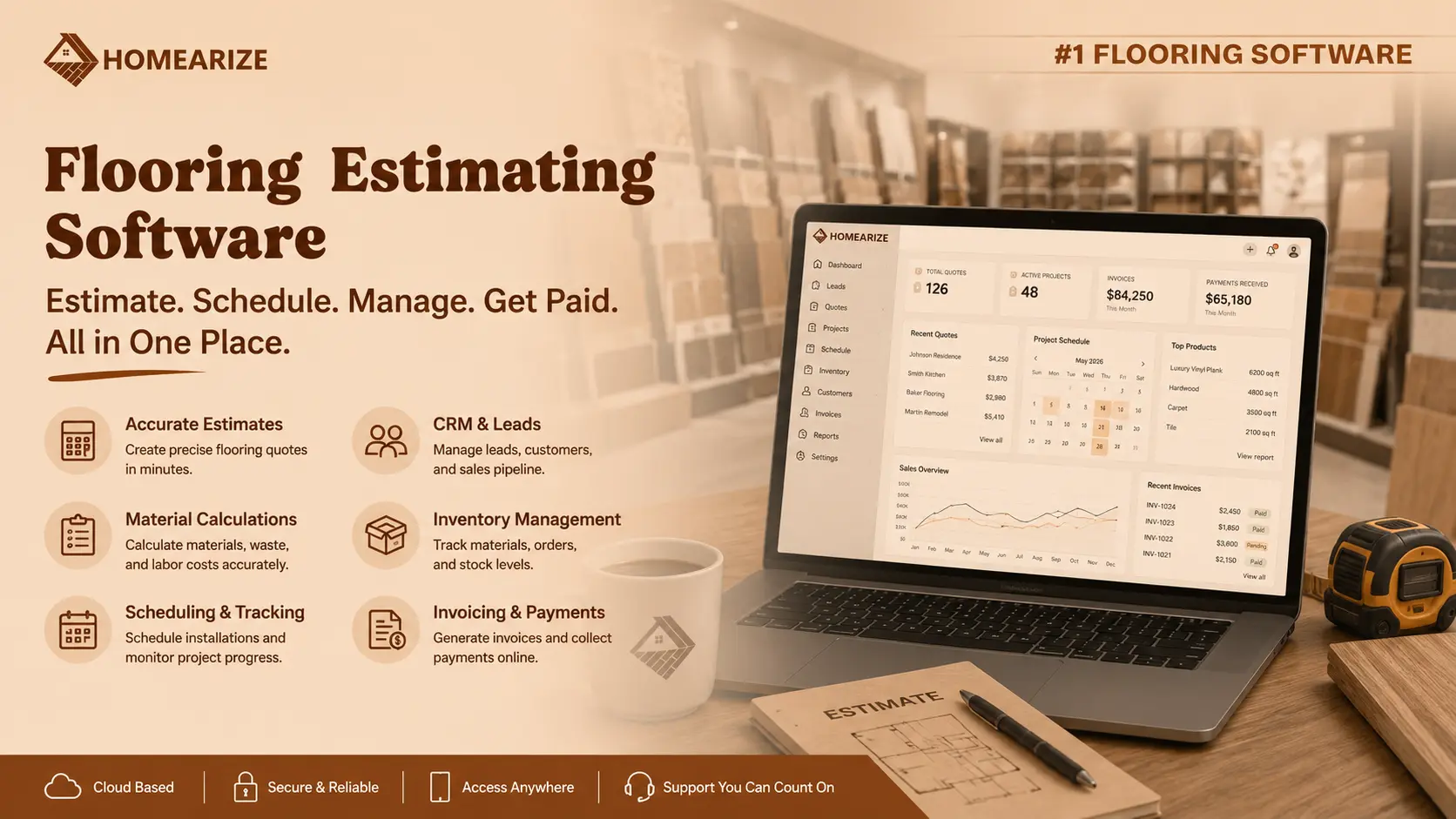
How to Choose Flooring Estimating Software: A 2026 Buying Guide
What Is Flooring Estimating Software?
Why Flooring Businesses Outgrow Spreadsheets
Faster decisions.
A polished quote goes out before the customer has time to shop around.
Less waste.
Material quantities and waste percentages are calculated correctly for each flooring type instead of estimated by feel.
Stronger pricing.
Margins stay protected because markups aren't re-entered manually on every job.
Better customer communication.
Follow-up happens automatically instead of depending on someone remembering to call.
Easier team coordination.
Sales, operations, and installation work from the same numbers instead of separate notes.
What to Look for When Comparing Flooring Estimating Software
Built for flooring specifically, not adapted from construction software
Accurate calculators built into the quote, not a separate step
Margin visibility at the point of quoting, not after the fact
Connected to the rest of the job, not a standalone tool
Questions to Ask Before You Switch
Can it handle your actual measurement workflow?
Whether that's manual room measurements, a digital floorplan takeoff, or a mix of both depending on the job.
Does it separate materials from labor clearly?
Flooring pricing usually depends on getting both right independently, not blending them into a single number that's hard to audit later.
How does it handle multi-material jobs?
A single job quoting hardwood in the living room and tile in the kitchen shouldn't require two separate estimates stitched together manually.
What happens after the quote is approved?
Does the software connect the approved estimate to scheduling and invoicing automatically, or does someone need to re-enter the job into a different system?
Can your team actually learn it quickly?
A powerful system nobody on your sales floor wants to use ends up back on a spreadsheet within a few months.
What Actually Changes Once You Switch
Less rework.
Estimating correctly the first time reduces costly change orders.
Higher close rates.
Faster, better-formatted proposals win more of the leads you already have.
Stronger cash flow.
Quote, deposit, and final invoice stay connected instead of getting lost between systems.
More confident pricing.
Consistent markup and margin practices replace one-off discounting decisions made under pressure.
Ready to See This in Practice?
- Choosing the right flooring estimating software starts with knowing whether it was built for flooring specifically or adapted from generic construction tools.
- Margin visibility at the point of quoting matters more than margin calculations done after the fact.
- The best systems connect estimating directly to scheduling and invoicing, so approved quotes don't need to be re-entered elsewhere.
FAQs
What's the difference between flooring estimating software and flooring quoting software?
The terms are often used interchangeably, but estimating typically refers to calculating material quantities and costs, while quoting refers to presenting that estimate to a customer as a formal proposal. Most modern systems, including flooring estimating software, handle both in the same workflow.
How much does flooring estimating software typically cost?
Pricing varies by vendor and typically depends on team size and which features are included, such as scheduling, invoicing, or inventory tracking bundled in versus sold separately. It's worth comparing what's included in the base plan rather than just the sticker price.
Can I switch from a spreadsheet without losing my existing pricing and product data?
Most flooring estimating software supports importing product catalogs and pricing from a spreadsheet during setup, though the process varies by vendor. It's worth asking specifically how a system handles migration before committing.
Does flooring estimating software work for both retail showrooms and contractors?
Yes, though the workflow differs slightly. Retail estimating usually prioritizes consistent in-store pricing across salespeople, while contractor estimating often needs to handle larger, multi-room takeoffs with labor itemized separately from materials.
What's the difference between a takeoff and an estimate?
A takeoff is the measurement and material-quantity calculation for a job. An estimate applies pricing to that takeoff to produce a dollar figure. Some software treats these as separate steps; the better systems combine them into one pass.
How long does it typically take a team to learn new flooring estimating software?
This depends heavily on how closely the software matches your team's existing workflow. Systems built specifically for flooring retail tend to have a shorter learning curve than generic construction estimating tools adapted for the industry.