HomeArize
Learn how flooring lead management keeps quotes moving forward. A practical follow-up system flooring businesses can use to track prospects and close more sales.
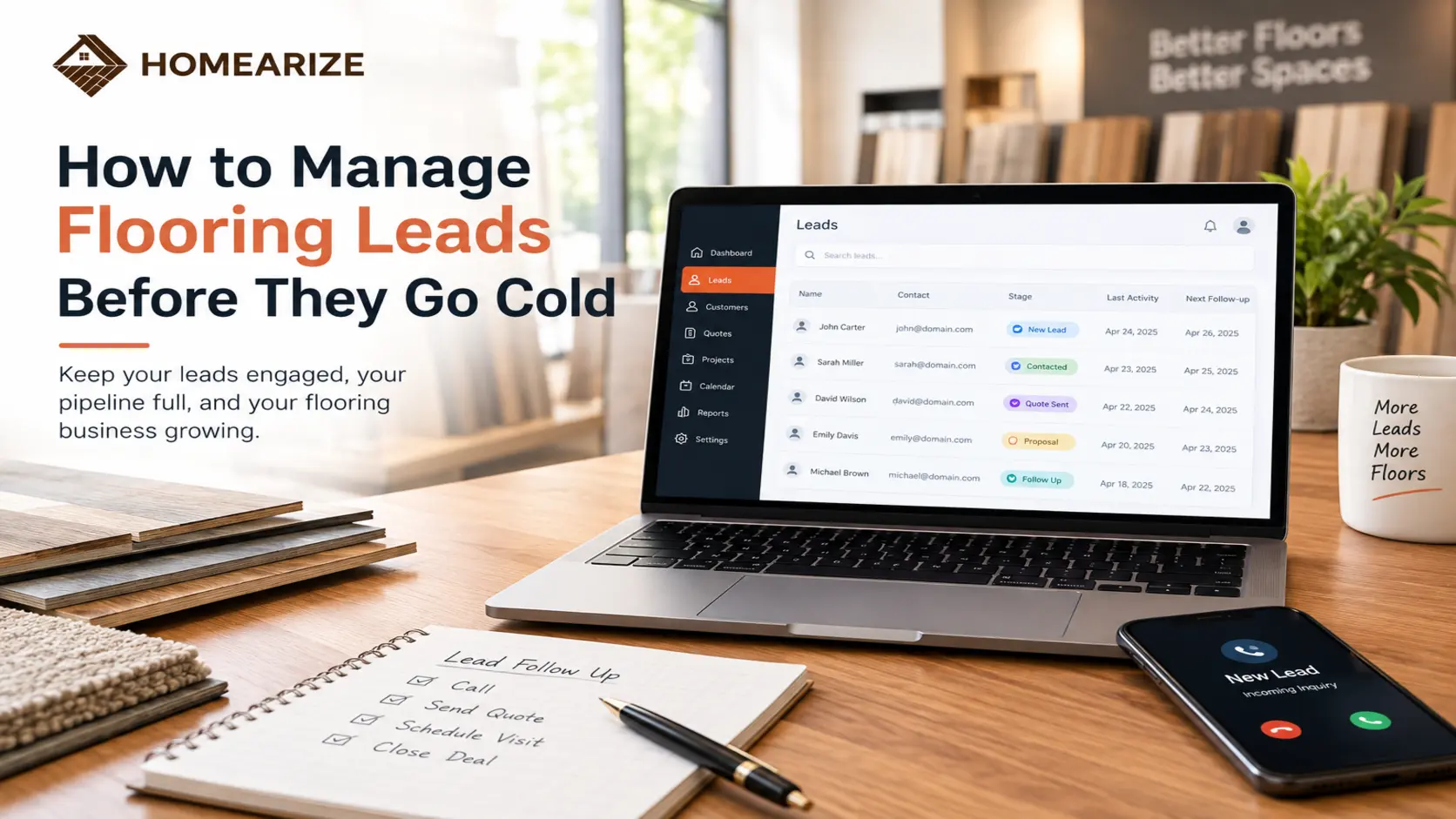
How to Manage and Follow Up With Flooring Leads Before They Go Cold
A homeowner fills out three quote requests on a Tuesday afternoon. Two showrooms call back within the hour. The third doesn't call until Thursday morning. By then the decision has usually already been made, and it's rarely in favor of whoever took three days to pick up the phone.
Talk to enough flooring store owners and you'll hear a version of this story more than once. Leads land in different places, a phone call one of the guys jotted on a receipt, a form submission buried in an inbox nobody checks between jobsite visits, a walk-in someone meant to follow up with but forgot by the end of the day. Nobody technically owns the follow-up. So it doesn't happen, or it happens late enough that it doesn't matter anymore.
Flooring lead management is really just the discipline of making sure that doesn't happen. Every inquiry gets a fast response, a plan for what comes next, and someone accountable for following through, no matter who happened to answer the phone.
Why Flooring Leads Go Cold So Fast
Flooring is a big purchase, sure, but the window to win the job is shorter than most owners think. A homeowner comparing hardwood or LVP quotes is almost always talking to two or three businesses at once, and more often than not, they go with whoever called back first and sounded like they had their act together.
There's research behind this, not just gut feeling. A widely cited Harvard Business Review study audited over two thousand US companies and found that only 37 percent responded to a new lead within an hour. The average response time, across the board, was 42 hours. Companies that did respond within that first hour were nearly seven times more likely to actually qualify the lead compared to companies that waited even a few hours longer.
Flooring businesses aren't some special exception to this. If a customer requests a quote today and doesn't hear back until the weekend, chances are they've already booked with someone else by Friday.
What Flooring Lead Management Actually Looks Like Day to Day
Strip away the buzzwords and flooring lead management comes down to a handful of habits, repeated consistently:
Capturing every lead.
Not just the ones someone remembers to write down. Phone calls, form fills, walk-ins, referrals, all of it.
Sorting them fast.
A homeowner asking about a full-house install isn't the same priority as someone downloading a general pricing guide.
Following up on a schedule.
Not a single call and then silence.
Keeping everything visible.
So if the salesperson who took the call is out sick, someone else can pick up where they left off.
None of this needs expensive software to start. It needs someone deciding this matters and sticking with it past the first busy week.
Building a Follow-Up System That Survives a Busy Week
Respond fast, obviously, but "fast" needs a real definition or it doesn't mean anything. Same-day quote requests should get a same-day call, ideally within the hour during business hours. Something that comes in after closing can wait until the next morning, but not until "whenever things slow down."
Speed alone won't close the sale though. Most flooring purchases take more than one conversation, so a follow-up needs a cadence behind it. Something like: first contact within the hour, a call back two or three days later if there's no response, a check-in email around day seven, and one last touchpoint near the two-week mark before marking it dormant. Write it down somewhere. Don't leave it to whoever remembers.
Templates help here, and there's nothing wrong with using them, but a message that reads "just checking in" gets ignored every time. Mention the actual room, the specific product, the number on the quote. A flooring quote follow up that says "wanted to see if you had any questions about the oak flooring for the living room" gets a reply. A generic nudge doesn't.
And log every touchpoint somewhere the whole team can see. If a lead's entire history lives in one salesperson's head, that context disappears the moment they're out for a day, and the next follow-up call starts from zero, which the customer notices.
Where Leads Usually Slip Through
A few patterns show up again and again. Website leads sit in an inbox nobody checks until the end of the day. A salesperson calls once, hits voicemail, and never tries a second time. Two people both assume the other is handling the same lead, so neither does. Or nobody has a record of what was already quoted, so the follow-up call restarts the whole conversation, which just feels disorganized to whoever's on the other end.
A website that routes inquiries straight into a shared system, instead of a generic contact form dumping into someone's personal inbox, closes off the most common one on that list.
How Flooring Lead Management Software Actually Helps
A notebook and good intentions can carry a small operation for a while. They tend to fall apart once lead volume picks up. That's usually when flooring lead management software starts earning its keep, pulling every inquiry, from the website, phone calls, walk-ins, into one pipeline, with reminders that flag anyone who hasn't been followed up with yet.
HomeArize's CRM was built around this exact problem. If you're figuring out what a flooring-specific CRM should actually do beyond storing names and numbers, the
flooring CRM guide walks through it in more detail.
What separates purpose-built
all-in-one flooring software from a generic CRM is the connection between lead tracking and everything downstream. A lead doesn't just sit with a follow-up reminder attached. It moves into an estimate, then a scheduled install, then an invoice, all inside the same record, without anyone re-entering the same information three times.
Getting From Follow-Up to Closed Sale
None of this matters if it doesn't translate into more jobs booked. And it does, businesses that respond fast, stick to a real cadence, and never lose the thread on a lead tend to close a noticeably higher share of their quotes, without touching pricing at all.
Quoting speed plays into this too. A homeowner who gets a detailed, accurate quote quickly is far easier to follow up with than one still waiting on numbers three days after the appointment. Pair fast follow-up with
flooring estimating software that turns a measurement into a quote the same day, and momentum stays on your side instead of the competitor's.
At the end of the day, flooring lead management isn't a system you set up once and forget. It's a habit, built on speed, structure, and not losing track of who said what. The flooring businesses that treat every inquiry the way they'd want to be treated as a customer are the ones consistently turning quotes into booked jobs. If your team is still tracking prospects across sticky notes and memory,
flooring business software that keeps leads, quotes, and follow-ups in one place is worth a look.
Highlights
- A slow follow-up is the single biggest reason flooring businesses lose winnable jobs to competitors.
- A working flooring lead management process needs four things: fast capture, clear ownership, a follow-up cadence, and visible tracking.
- The right flooring lead management software removes the guesswork so no quote or inquiry gets forgotten.
FAQs
What is flooring lead management?
It's the process of capturing, tracking, and following up on every sales inquiry a flooring business gets, from the first phone call through to a closed job or a lost one, so nothing falls through the cracks.
How fast should a flooring business respond to a new lead?
Within the first business hour if at all possible. Studies on lead response times consistently show that businesses contacting a lead within an hour qualify it far more often than those who wait even a couple hours longer, and flooring inquiries behave the same way.
What's the best way to follow up on a flooring quote that's gone quiet?
Work off a set cadence rather than a single call and done. A follow-up two or three days after the quote, a check-in email about a week later, and one last message around the two-week mark covers most situations without coming across as pushy.
Do I actually need flooring lead management software, or can I get by tracking leads manually?
Manual tracking can hold up fine at very low volume. It falls apart quickly once more than one person is handling inquiries. Software removes the risk of a lead getting lost between two team members or forgotten during a busy stretch.
How is flooring lead tracking different from just using a general CRM?
A generic CRM tracks contacts and deals. Flooring-specific lead tracking ties those leads directly to measurements, material quotes, and install scheduling, so sales and production aren't working off disconnected information.
Why do most flooring sales leads actually fall through?
Slow or inconsistent follow-up, more often than price. Most lost flooring leads didn't go with a cheaper competitor. They went with whoever called back first and kept following up while the original business went quiet.
Tags:
Flooring Lead ManagementFlooring CRMFlooring SalesLead Follow UpFlooring Software